



Gem has built a reputation for its AI-driven recruiting automation, but for many teams, it’s not the right fit. High costs, simple interview features, and slow support often push teams to look elsewhere.
The good news is that there are strong alternatives available—platforms that directly address these gaps. In this blog, I’ll take you through the top 5 Gem alternatives to check out.
Why recruiters are looking for a Gem alternative
Gem is strong when it comes to sourcing and CRM, but as teams scale or try to expand beyond sourcing, some consistent gaps start to show up in real user feedback.
Here are some reasons we came across from real user feedback on why they start exploring alternatives for Gem:
1. AI features don’t always deliver expected value
Gem heavily positions itself as an AI-first recruiting platform. But in practice, some users feel the AI doesn’t consistently outperform manual workflows or competing tools.
Feedback from real users highlights that:
- AI-based applicant review can feel underwhelming in real hiring scenarios
- Teams often don’t fully adopt these features after testing them internally
- Competing tools offer similar or better AI capabilities without the same complexity

For teams investing specifically for AI-driven efficiency, this gap becomes a key reason to look elsewhere.
2. UI friction and slower workflows
A recurring theme across reviews is that the product can feel clunky in day-to-day use.
Users specifically call out:
- Too many clicks to complete simple actions
- Slower workflows when adding or managing candidates (especially via Chrome extension or CSV uploads)
- Navigation between features not being intuitive
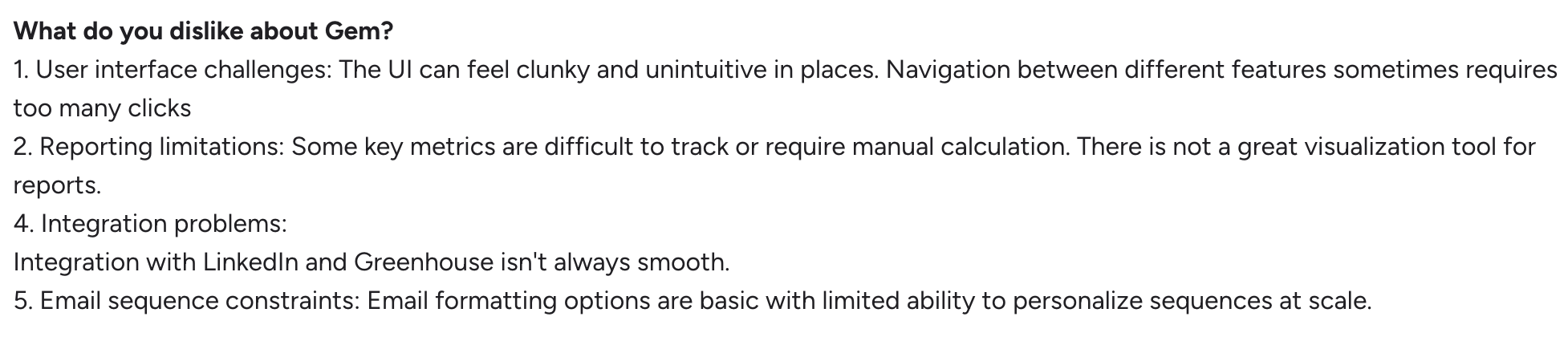
Over time, this impacts recruiter productivity—especially for teams handling high volumes.
3. Limited customization and workflow flexibility
Gem works well for standard sourcing workflows, but can feel restrictive when teams try to tailor it to their own processes.
Common feedback includes:
- Limited flexibility in adapting workflows to unique hiring needs
- Certain features feeling “boxed in” rather than configurable
- Difficulty building highly customized recruiting processes

For teams that want more control over pipelines, automation, or reporting, this becomes a constraint.
4. Integration inconsistencies
Gem integrates with tools like LinkedIn and ATS platforms, but the experience isn’t always seamless.
Users report:
- Occasional issues with LinkedIn and ATS integrations
- Data syncing inconsistencies
- Extra manual steps to keep systems aligned
This reduces the “single source of truth” experience that many teams expect.
5. Not a complete ATS replacement (yet)
Gem originally started as a sourcing and CRM tool, and while it has expanded into ATS functionality, some teams still feel it’s not fully mature in that area.
From user feedback:
- ATS capabilities may lack depth compared to more established systems
- Some advanced features and integrations are still evolving
- Teams often still rely on additional tools for full workflow coverage
This creates fragmentation—the exact problem many teams are trying to solve.
Overall, Gem is a strong option for sourcing-heavy teams. But once hiring becomes more complex—requiring deeper analytics, better workflows, and tighter integrations—many teams start exploring alternatives that can handle the full hiring process more effectively.
How we compared the best Gem alternatives
To put this list together, we didn’t just rely on feature lists or vendor claims—we tested these tools the way recruiting teams actually use them.
Kula’s in-house recruiting team evaluated multiple platforms across real hiring workflows, including sourcing, pipeline management, scheduling, and reporting. The goal was simple: understand how these tools perform in day-to-day recruiting, not just in demos.
In collaboration with Kula’s in-house recruiting and sales teams (to understand what buyers are looking for), we evaluated these Gem alternatives based on how recruiting teams actually use them.
We evaluated each tool across a consistent set of criteria:
- Sourcing and outreach: How easy it is to find, engage, and track candidates
- Workflow efficiency: Number of steps, UI clarity, and overall speed of execution
- Customization: How well the tool adapts to different hiring processes
- Analytics and reporting: Depth, flexibility, and ease of accessing insights
- Integrations: How reliably the tool connects with other systems
- AI capabilities: How useful AI actually is in practice—across sourcing, screening, automation, and reporting (not just how it’s marketed)
- Time to value: How quickly a team can get up and running
Alongside hands-on testing, we also analyzed 200+ user reviews across G2, Capterra, Reddit, YouTube reviews, LinkedIn recruiter discussions, and insights from our in-house sales team conversations with teams actively migrating away from Gem.
This combination of real usage and external feedback helped us cut through marketing claims and focus on what actually matters when you’re hiring at scale.
The result is a shortlist of tools that don’t just look good on paper, but hold up in real recruiting environments.
Quick comparison of the top Gem alternatives we evaluated
- Workable: Best for small to mid-sized teams that want quick setup with basic HR functionality
- Kula: Best for teams looking to consolidate ATS, CRM, scheduling, and analytics into one AI-native platform
- Greenhouse: Best for structured hiring with standardized interviews and strong process control
- Ashby: Best for all-in-one recruiting with advanced analytics and customizable workflows
- Workable: Best for small to mid-sized teams that want quick setup with basic HR functionality
- BambooHR: Best for HR-led teams that need hiring integrated with payroll and employee management
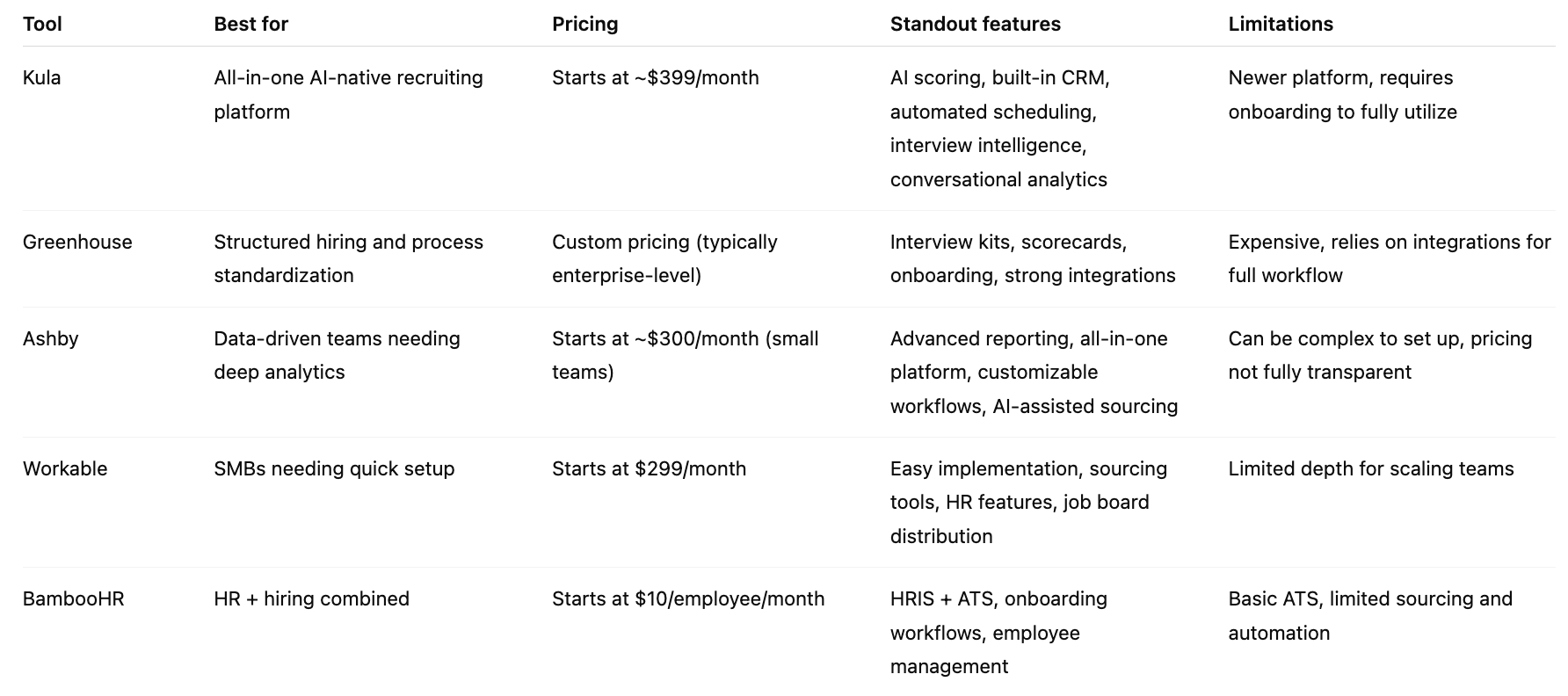
5 best Gem alternatives for hiring teams
1. Workable: Best ATS + employee data management platform
Best use case: HR teams who want to consolidate hiring, employee data management, time tracking and payroll.
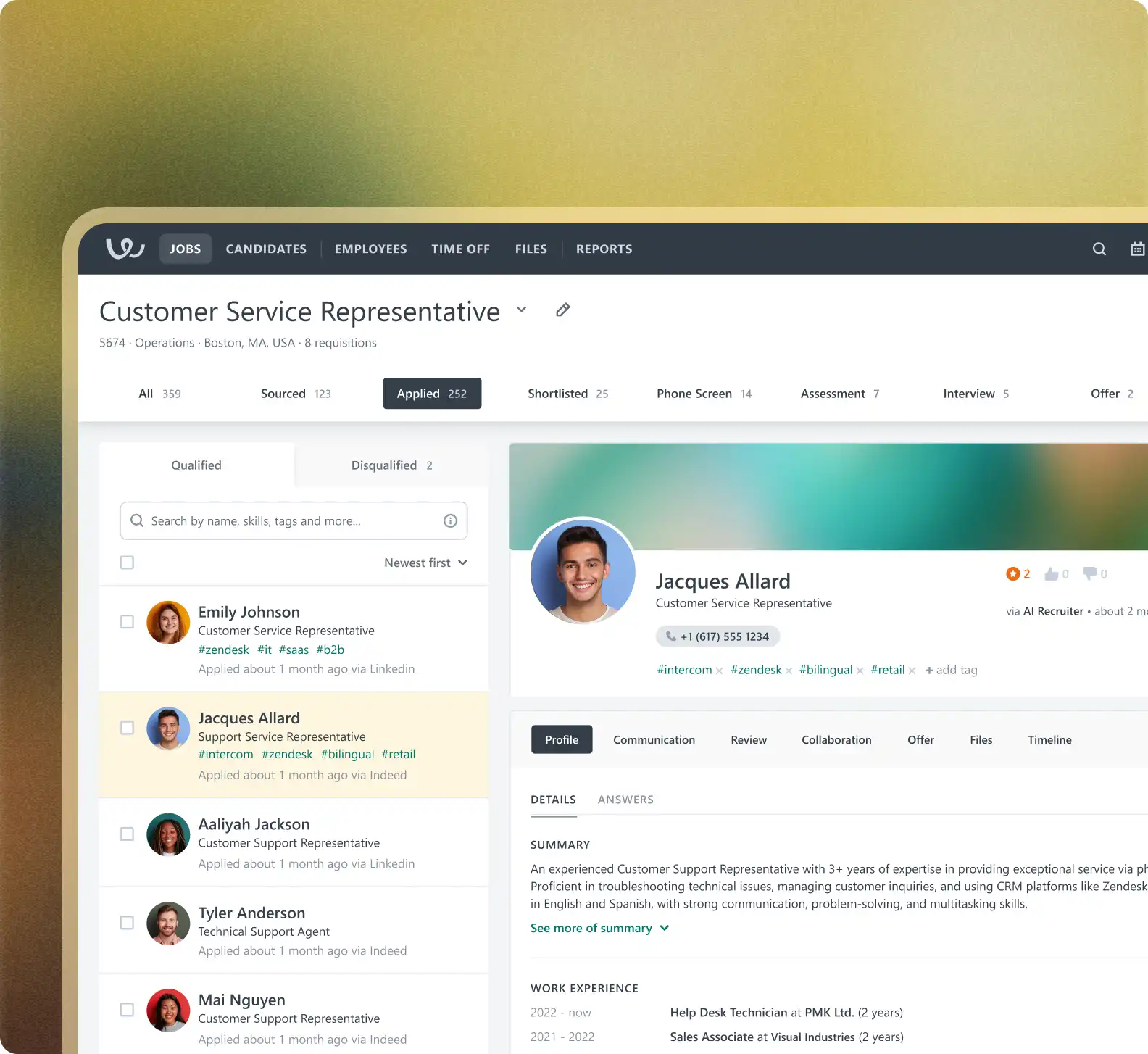
Workable is positioned as a complete recruiting and HR platform that combines applicant tracking, candidate sourcing, and core HR tools in one system.
It’s designed to help teams manage the full hiring lifecycle—from job posting and sourcing to onboarding and employee management—without relying heavily on external tools.
Workable’s biggest strength lies in sourcing and automation. It also includes built-in HR features like onboarding workflows, employee records, and time-off tracking, making it more than just an ATS.
Key features:
- AI-assisted screening with match scores, summaries, and resume parsing
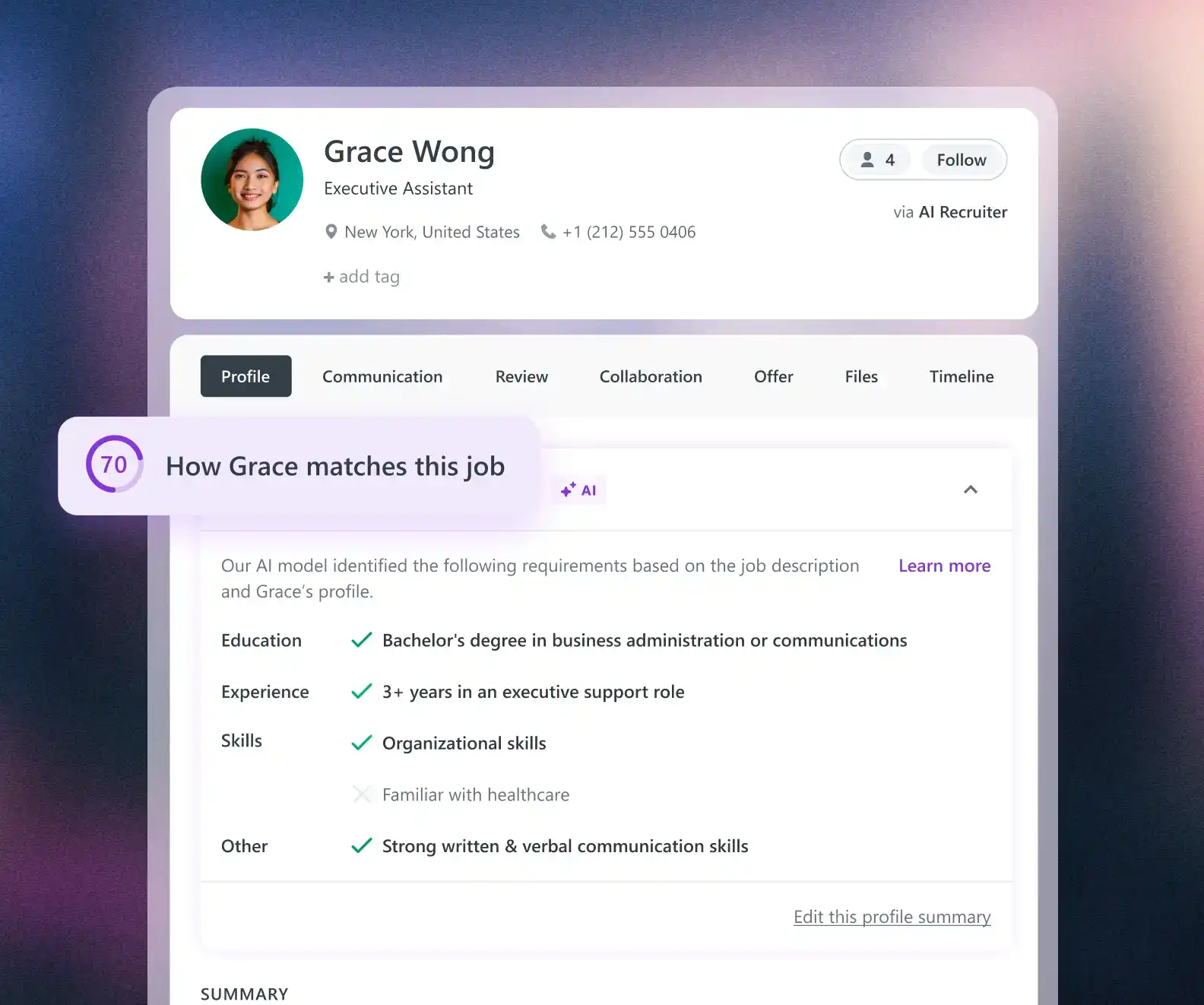
- Structured interview kits, anonymized screening, and one-way video interviews
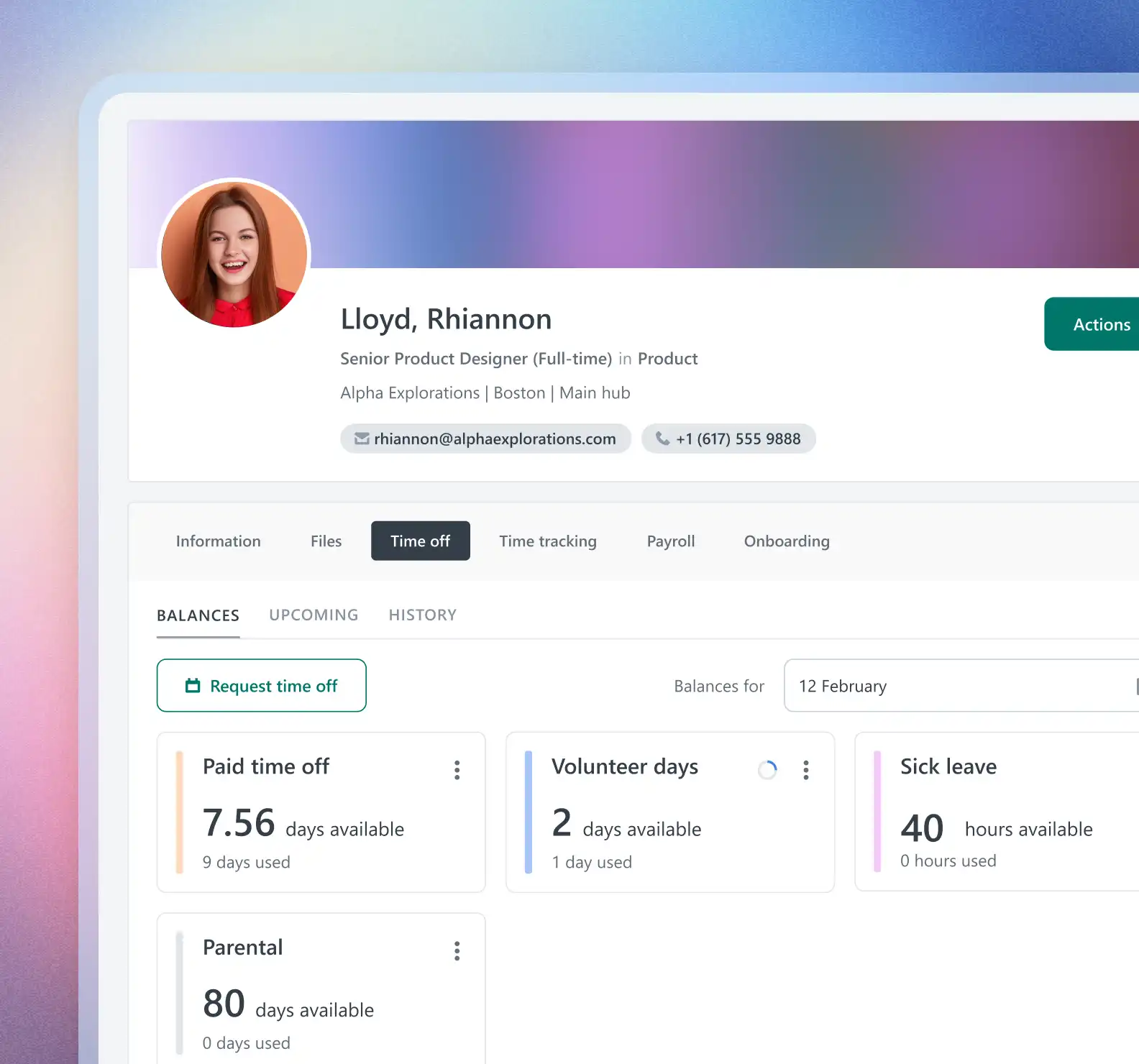
- HRIS features including employee profiles, org charts, time-off tracking, and payroll integrations
- Candidate self-scheduling with calendar sync and automated interview coordination
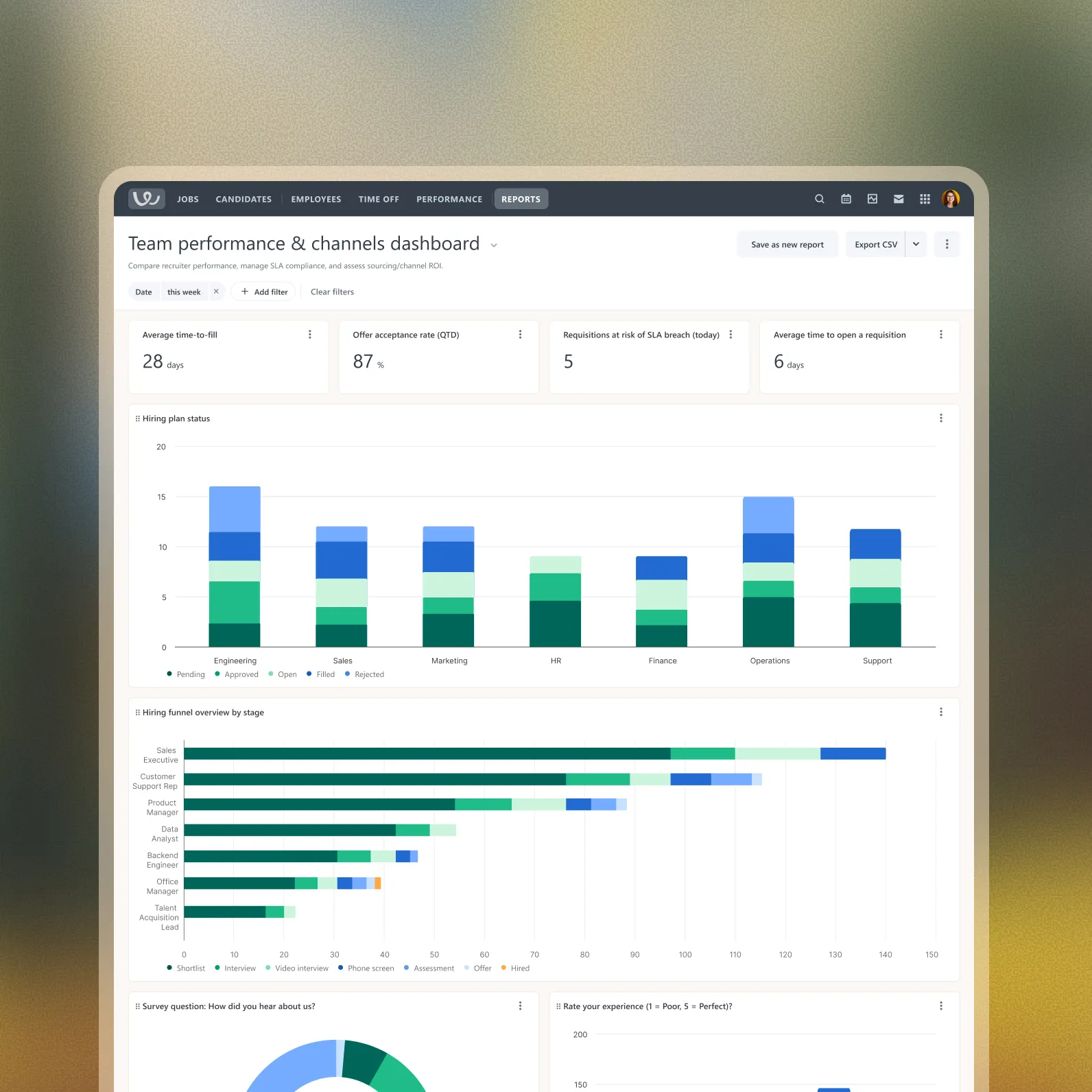
- Advanced reporting with custom dashboards and BI integrations
- Built-in onboarding portal with task tracking and document management
Pros:
- Strong built-in sourcing with access to a large candidate database
- Covers both recruiting and HR in a single platform
When not to choose this tool:
- Can become expensive as you scale or add features
- If you require more specialization or a dedicated ATS tools for complex recruiting workflows
Pricing:
- Standard: $299/month (small teams)
- Premier: $599/month
- Enterprise: $719/month
- Add-ons available for texting, video interviews, assessments, etc.
How Workable compares to Gem: Compared to Gem, Workable is easier to set up and better suited for teams that want built-in sourcing and basic HR functionality in one place.
However, it lacks the AI-powered features and automations that Gem offers. If you’re looking for a platform that brings together employee data and payroll, along with ATS+CRM capabilities, then Workable might be a better fit over Gem.
2. Kula: Best all-in-one AI-native ATS
Best use case: Teams that want an all in one, AI-native ATS that consolidates sourcing, applicant tracking, automated interview scheduling, interview intelligence with built-in notetaker, AI-driven analytics, and candidate communication into one system for multiple stakeholders.
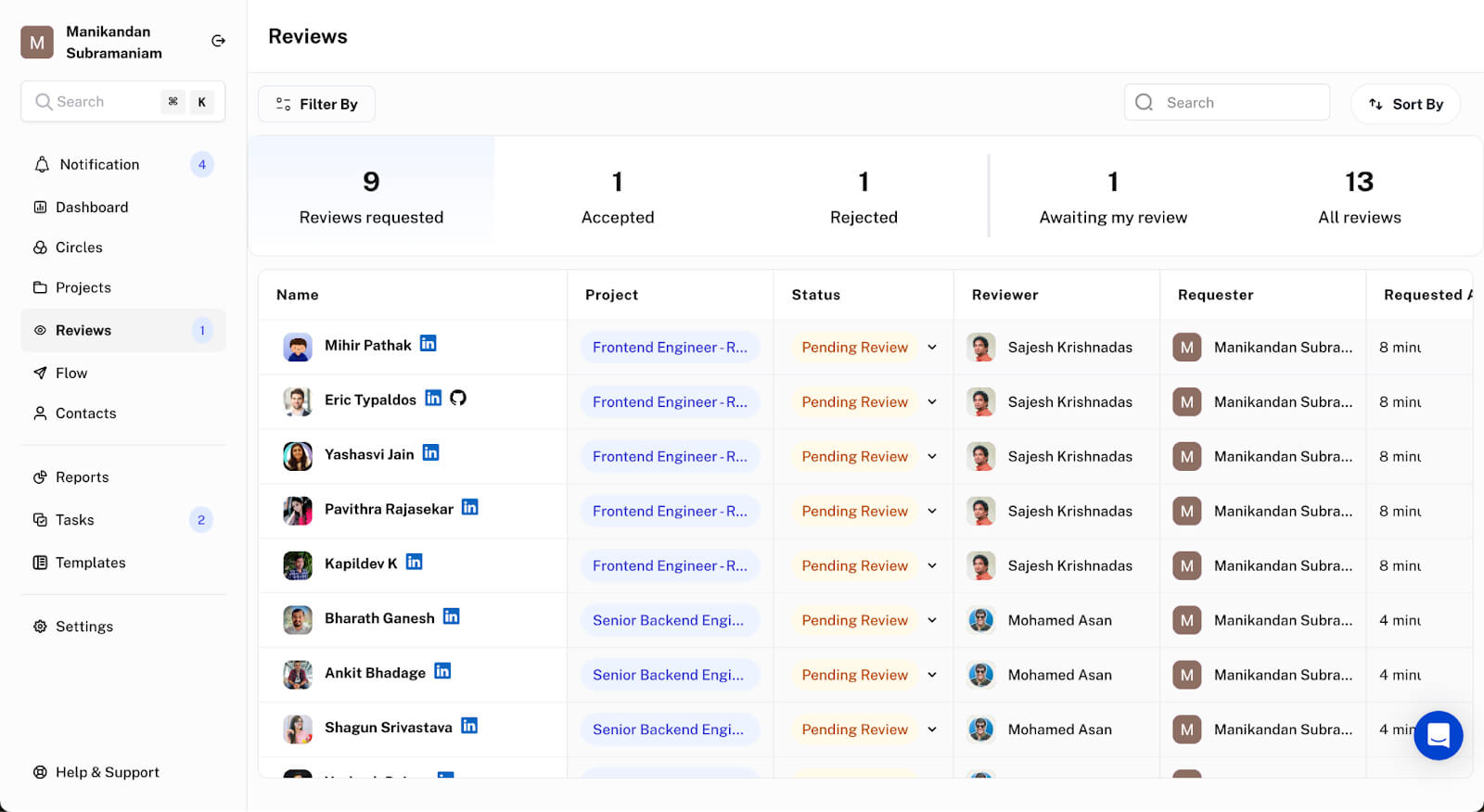
Kula is an all-in-one AI-native recruiting software designed to handle the entire hiring workflow within a single platform. Unlike most ATS platforms that rely on integrations for sourcing, scheduling, or analytics, Kula includes these capabilities natively.
The best part about Kula is that AI isn’t treated as an add-on layer or additional ATS feature. You’ll find AI built into each feature to make hiring more smarter and streamlined for your team.
The main advantage is that all data—candidate profiles, outreach activity, interview feedback, hiring metrics, and even candidate assessment and job offer roll outs—are all stored in one system.
I found Kula to be pretty intuitive, easy to use and requires almost no learning curve. It’s also extremely easy to migrate to Kula, and doesn’t require much time.
The user interface is very smooth and has no unnecessary steps that elongate the hiring process.
Key features:
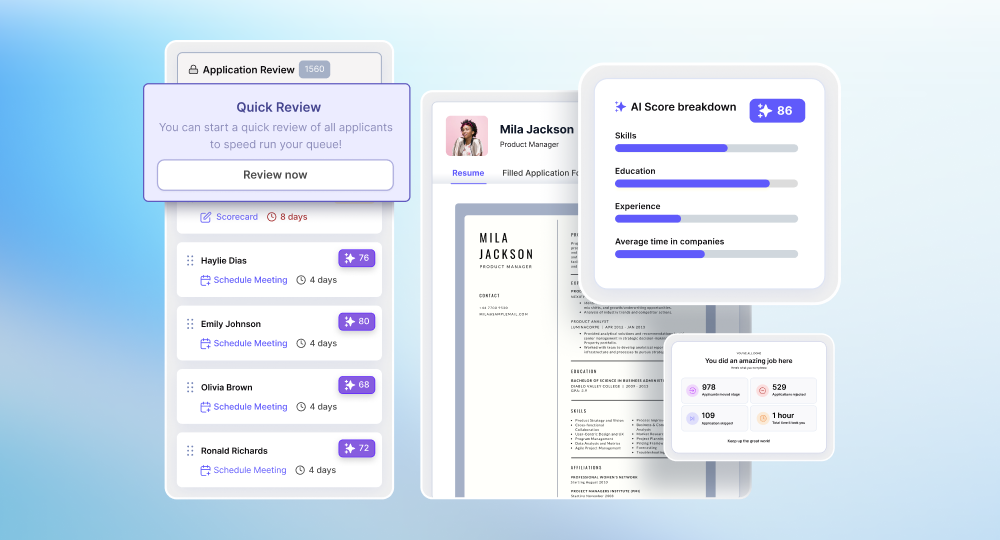
- AI scoring for candidate evaluation: Recruiters can define role-specific criteria such as skills, experience, and qualifications. The system automatically scores and ranks candidates based on these inputs, reducing manual resume screening and improving consistency.
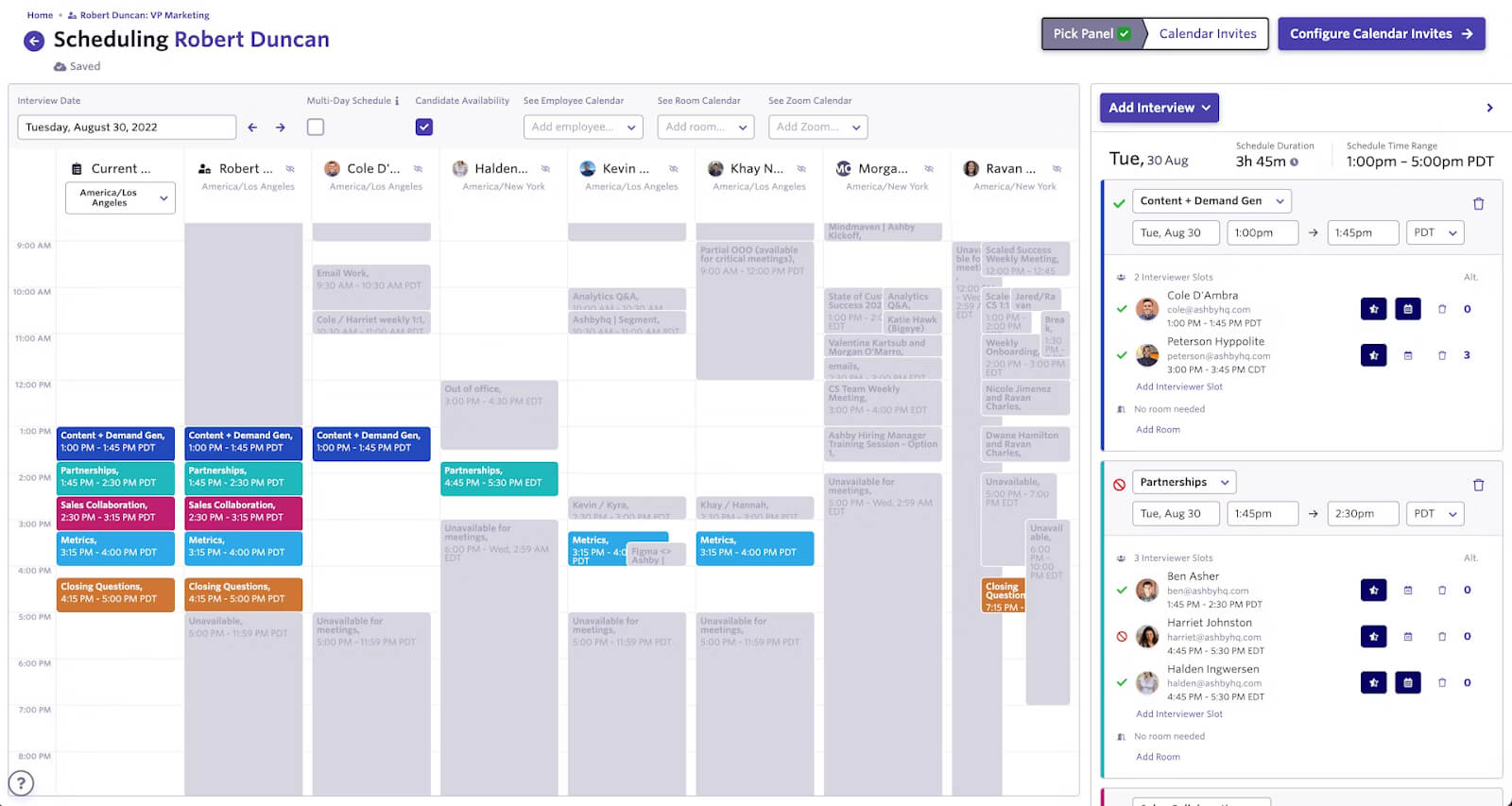
- Built-in interview scheduling: Candidates can self-schedule interviews based on interviewer availability. The system accounts for interviewer workloads and prevents conflicts, which reduces coordination effort and scheduling delays.
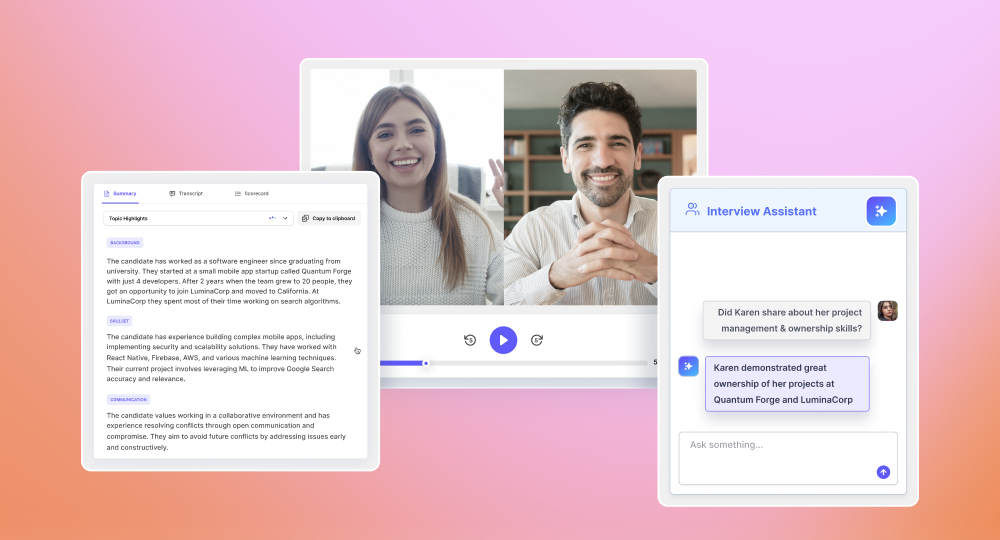
- Interview intelligence and structured feedback: Interviews are recorded, transcribed, and summarized. Scorecards can be auto-filled based on the conversation, helping teams standardize feedback and make more consistent hiring decisions.
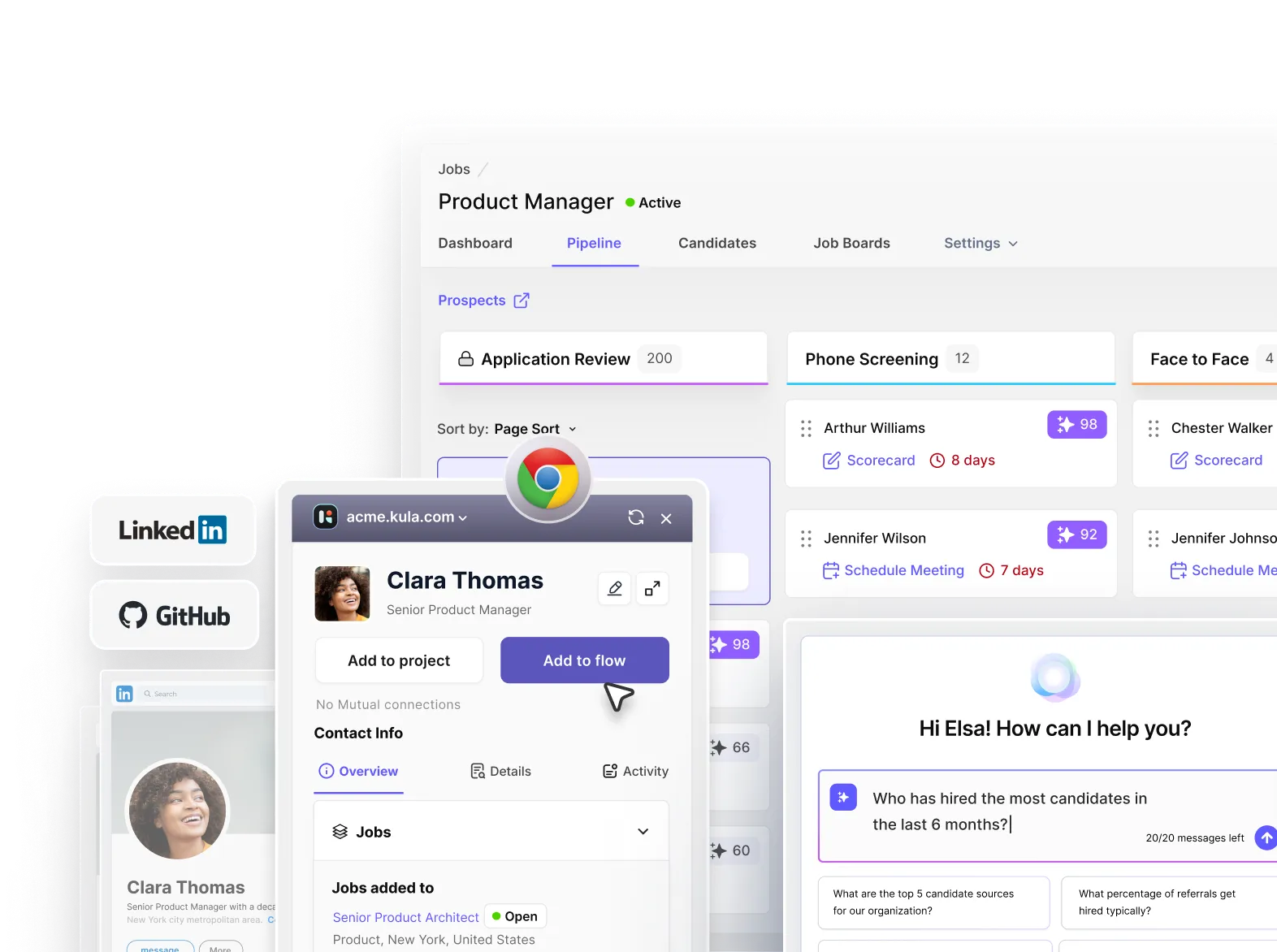
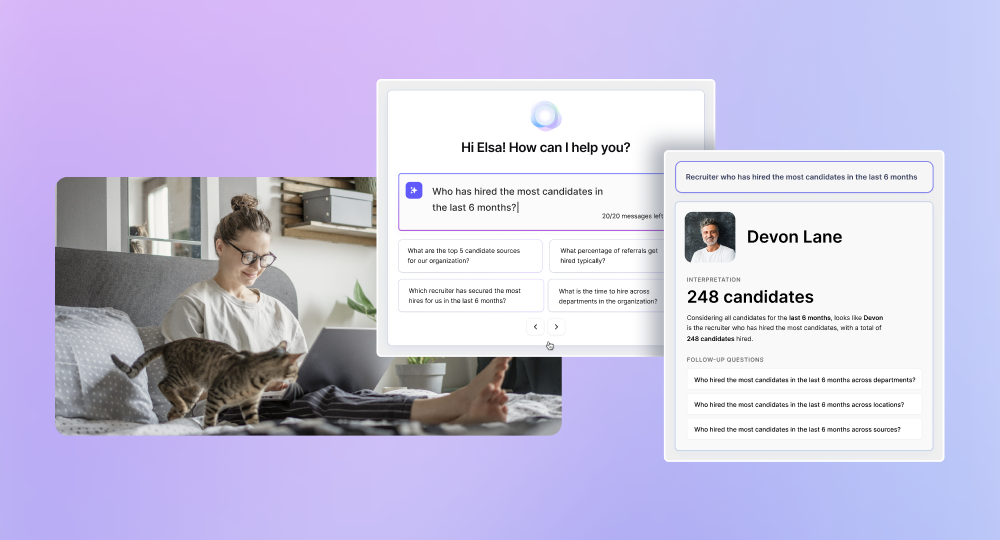
- Conversational analytics and reporting: Users can use conversational queries to get quick recruiting KPIs and data instead of building reports manually. This allows teams to quickly identify bottlenecks, track performance, and answer operational questions without exporting data.
- Automated multi-channel candidate outreach: Run personalized outreach across email and LinkedIn with automated sequences and follow-ups, while tracking all engagement directly within the candidate profile.
Pros:
- Combines ATS, CRM, interview scheduling, note taking, reporting, candidate reviewing, and the full hiring process stages all into one system for recruiters and hiring managers
- Reduces dependency on third-party tools
- Integrations with DocuSign and PandaDoc for automated offer letters with templates
- Automates high-effort tasks like screening and scheduling
- Reporting faster, easier, and more customizable compared to traditional ATS platforms
- Conversational AI analytics for access to quick and specific data insights
When not to choose this tool:
- If you’re looking for a more legacy tool over a newer platform
Pricing:
- Starter plan starts at approximately $399/month
- Higher tiers are custom priced based on company size
How Kula compares to Gem: Kula is a strong option for teams that want to reduce tool fragmentation and improve hiring efficiency. I actually found both Gem and Kula quite similar in terms of tool centralization and keeping features very AI-focused.
But I did find that Gem can become expensive with all the additional add-on features—which Kula already provides with no additional cost. Overall, I found Kula a more all-in-one consolidated ATS as it offers everything you could need whether you’re a small or large hiring team.
3. Greenhouse: Best for a candidate-focused recruiting process
Best use case: Companies that require structured hiring processes, standardized interviews, built-in candidate onboarding features and strong talent matching.
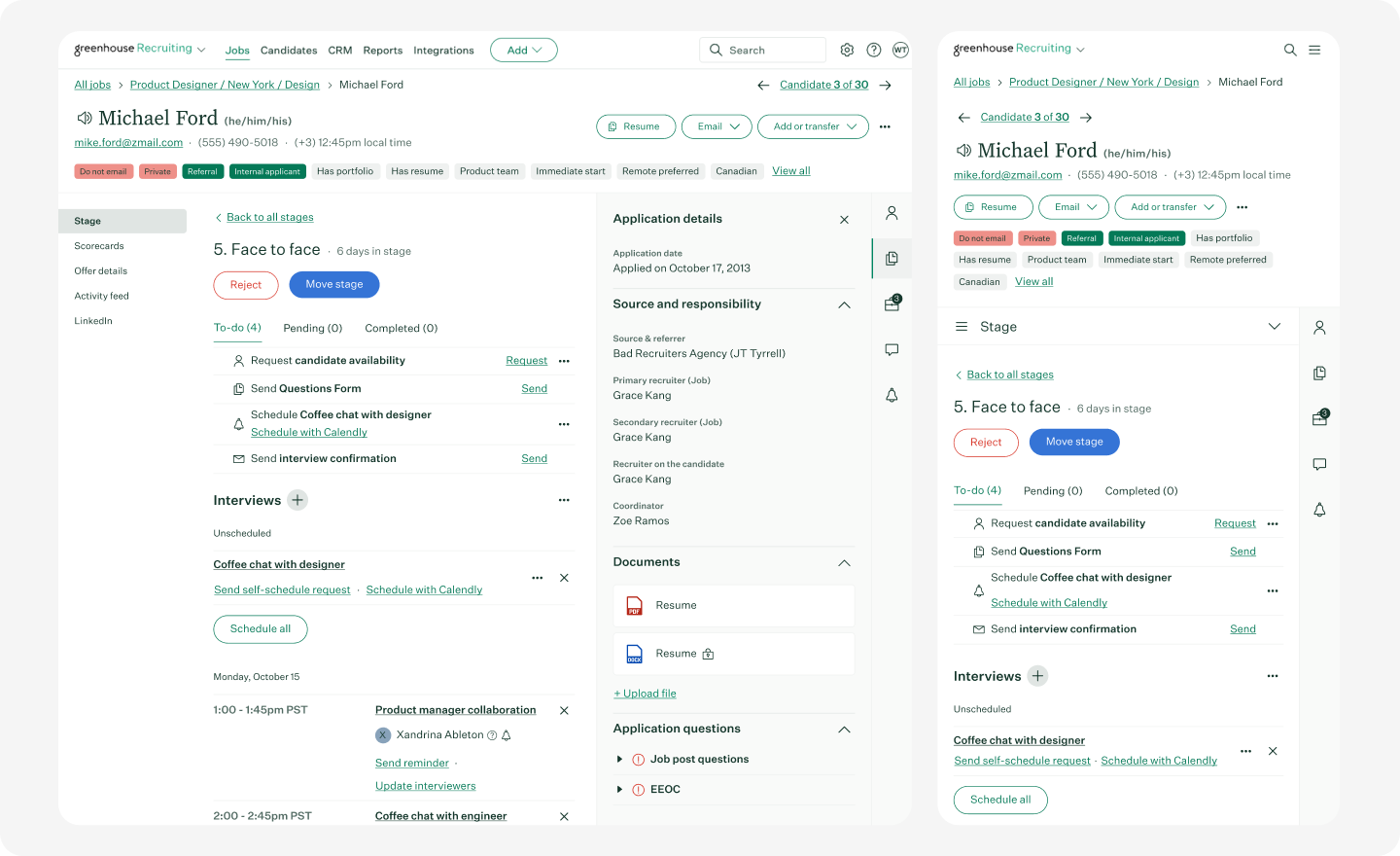
Greenhouse is a widely adopted applicant tracking system used by scaling and enterprise teams. Its core focus is structured hiring, where every candidate is evaluated using predefined stages, interview plans, and scorecards.
This approach helps organizations maintain consistency across hiring decisions, especially when multiple stakeholders are involved. It is particularly effective for companies that prioritize process standardization and compliance.
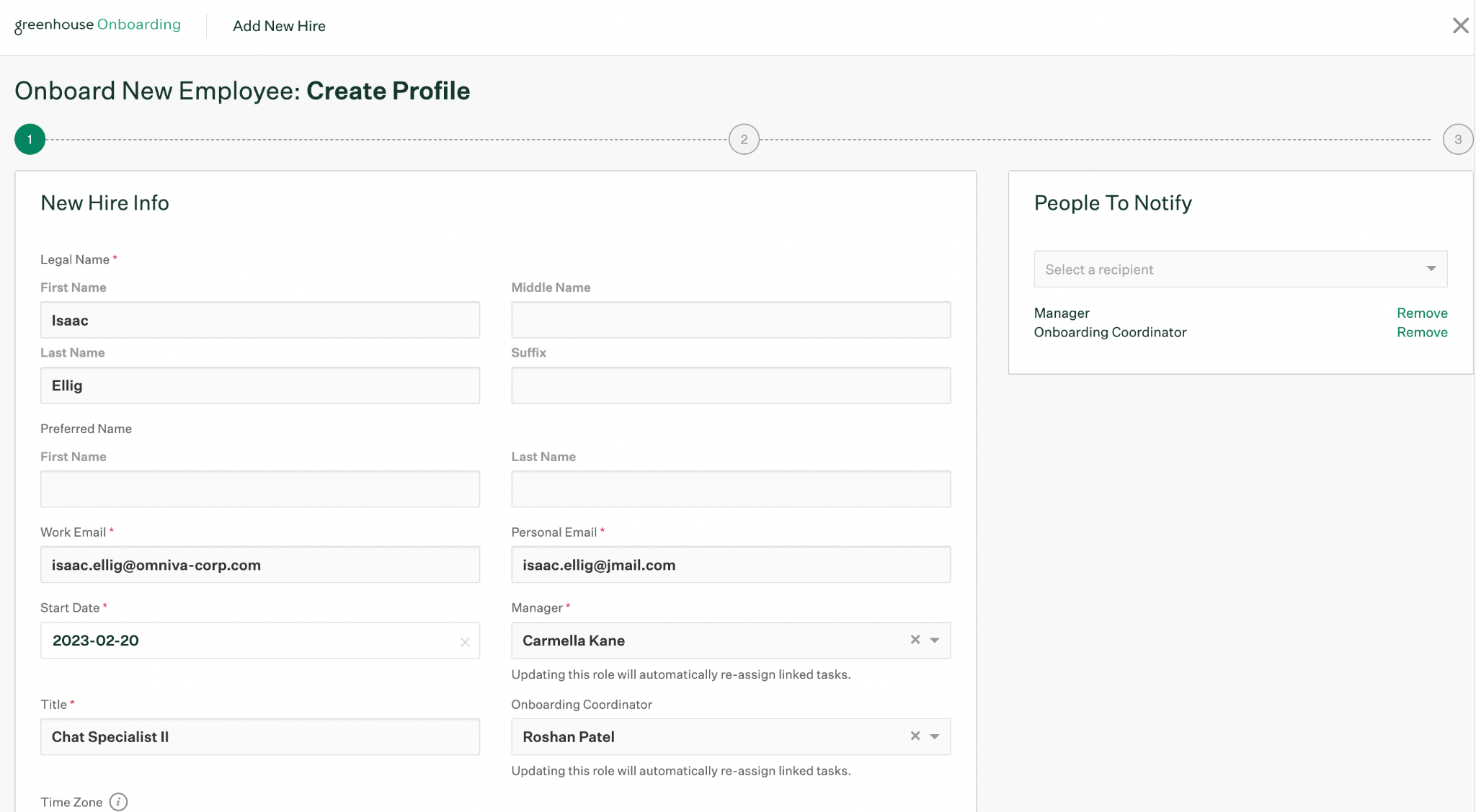
Greenhouse’s standout feature has to be their onboarding system. Once a candidate is finalized, onboarding can become messy as it usually takes place outside the ATS. With Greenhouse, you can keep track of all your new hires and automate communication with them.
Key features:
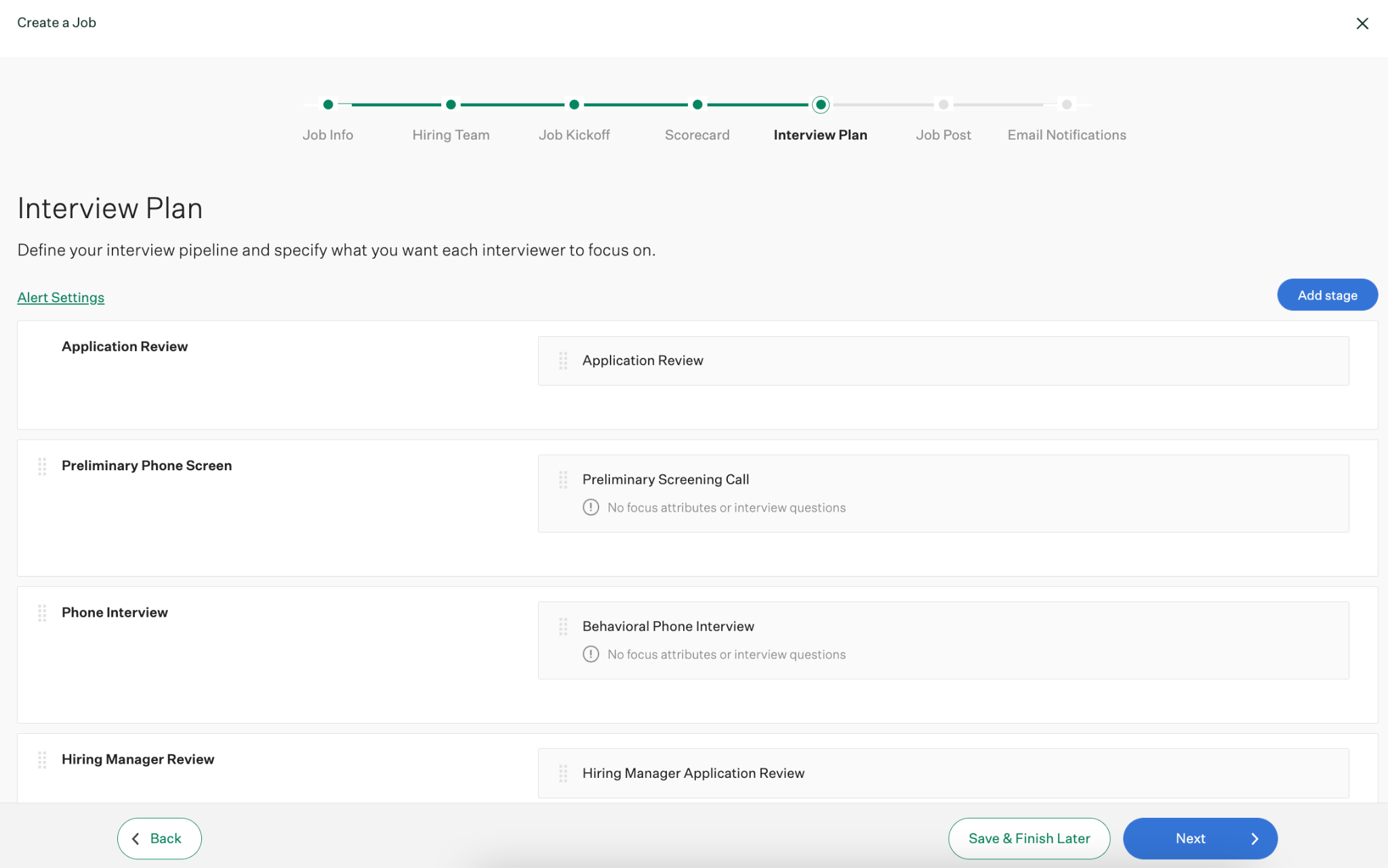
- Structured hiring workflows: Teams can define interview stages, assign interviewers, and standardize evaluation criteria for each role. This ensures consistency across all candidates and reduces subjective decision-making.
- Interview kits and scorecards: Provides predefined interview questions and evaluation templates. Interviewers use structured scorecards, which improves the quality and comparability of feedback
- Built in onboarding system for new hires: Offers a resource hub for new employees, automated welcome messages and emails, and task automation for internal teams.
- Integration marketplace: Integrates with a wide range of tools, including HRIS platforms, sourcing tools, and assessment providers. This allows teams to extend functionality as needed.
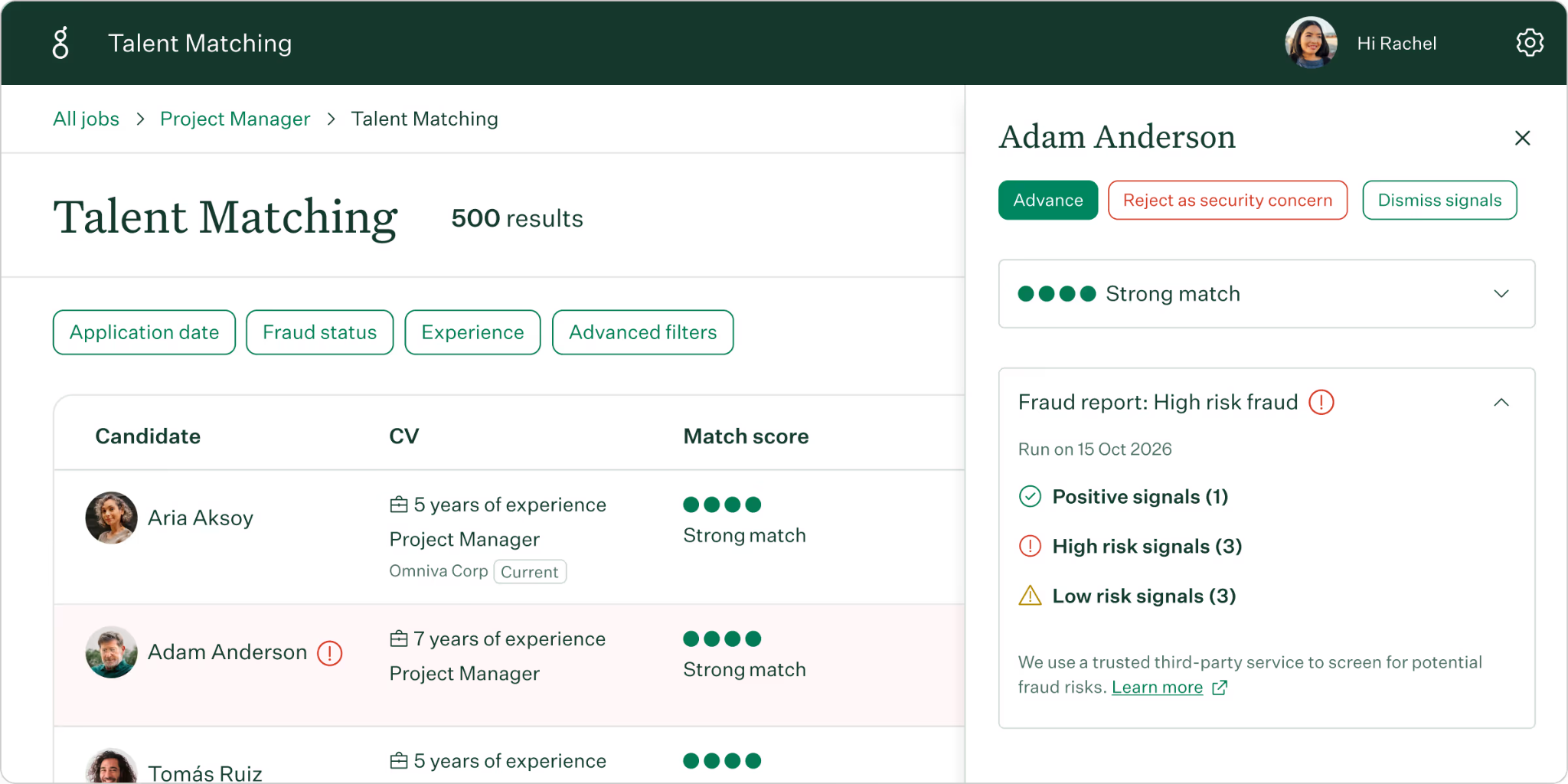
- Candidate fraud detection: Flags suspicious applications by analysing signals like phone number, email, IP address and location
- AI-assisted hiring tools: Features include automated interview plan generation, resume anonymization, and interview summaries. These are designed to support efficiency but are not deeply integrated across all workflows.
Pros
- Greenhouse is scalable, particularly for larger organizations (e.g., a 2,000-person company).
- It is consistently praised for its user-friendly design
- Offers extensive integration capabilities, supporting over 500 pre-built integrations with HR, onboarding, and business tools
When not to choose this tool:
- Expensive pricing compared to many alternatives
- Pricing plans for small businesses lack several essential features, such as bulk actions, candidate self-scheduling, and custom reporting
- If you’re looking for an ATS dedicated to recruiting and sourcing functions rather than a consolidated HR platform
Pricing:
- Available at request
How Greenhouse compares to Gem: Compared to Gem, Greenhouse is great at talent matching and providing a candidate-focused hiring experience. Its features are designed to handle high volume hiring in a structured manner with strong control over interviews and evaluations.
It also offers better integrations and ATS capabilities as compared to Gem. Overall, Greenhouse felt more catered towards general HR functions and Gem seems to have a hard focus on AI sourcing and talent management. So keep this in mind when comparing the two for your team’s needs.
👉Looking for Greenhouse alternatives? Check out our guide.
4. Ashby: Best for all-in-one recruiting with strong analytics
Best use case: Teams that want to consolidate their ATS, CRM, sourcing, scheduling, and analytics into a single platform—without sacrificing flexibility or depth.
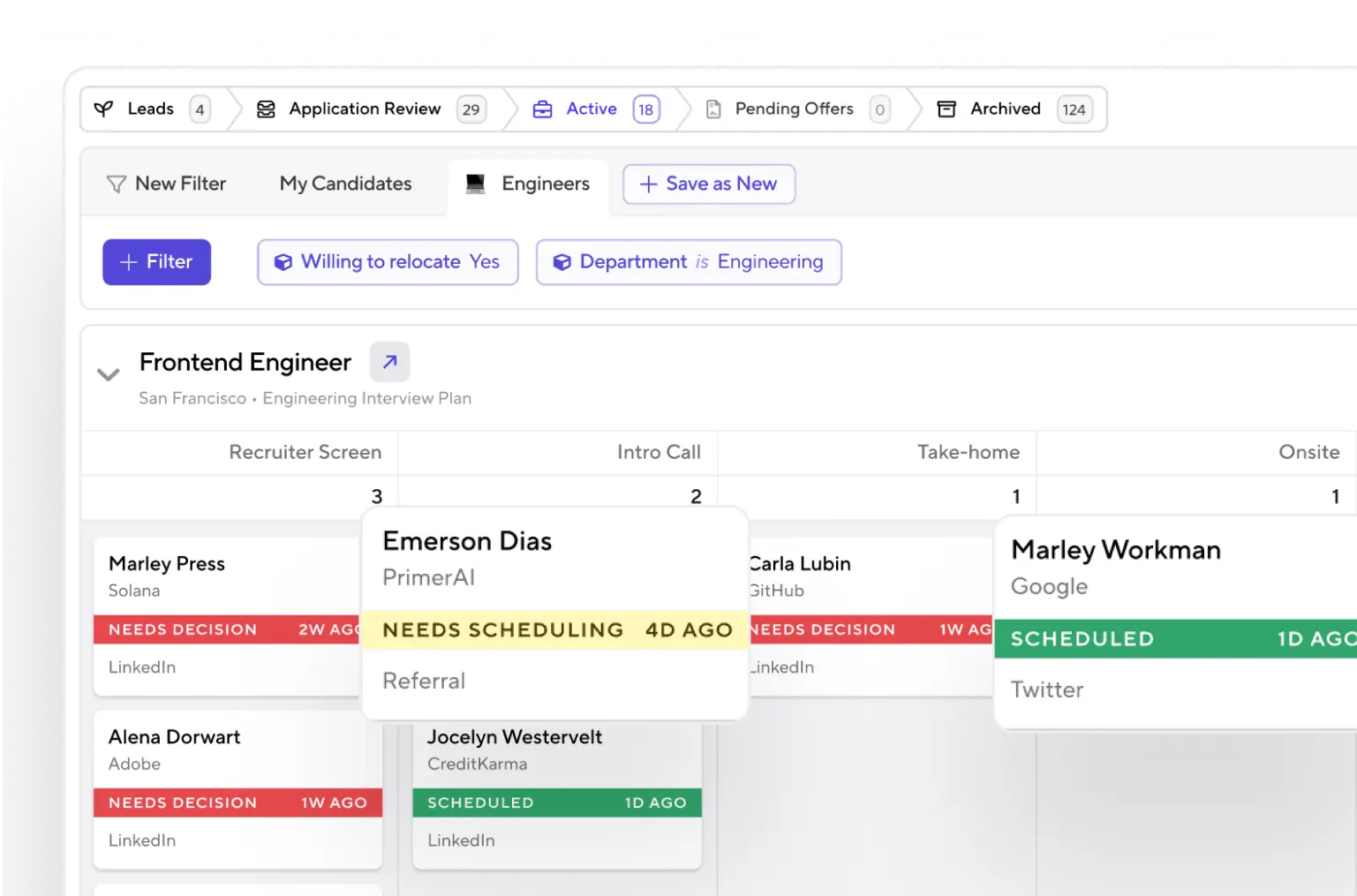
Ashby is built as a true all-in-one recruiting platform, combining ATS, sourcing, CRM, scheduling, and analytics into a single system. Unlike tools that bolt on features over time, Ashby is designed to keep every part of the hiring workflow connected—from first outreach to final offer.
Where it stands out is in how tightly integrated everything feels. Instead of switching between tools for sourcing, outreach, scheduling, and reporting, teams can manage the entire hiring process in one place.
When compared to Gem, what’s great about Ashby is how it’s suitable for all types of hiring teams whether you’re a startup with 1-100 employees, a growing team, or an enterprise with 1000+ employees.
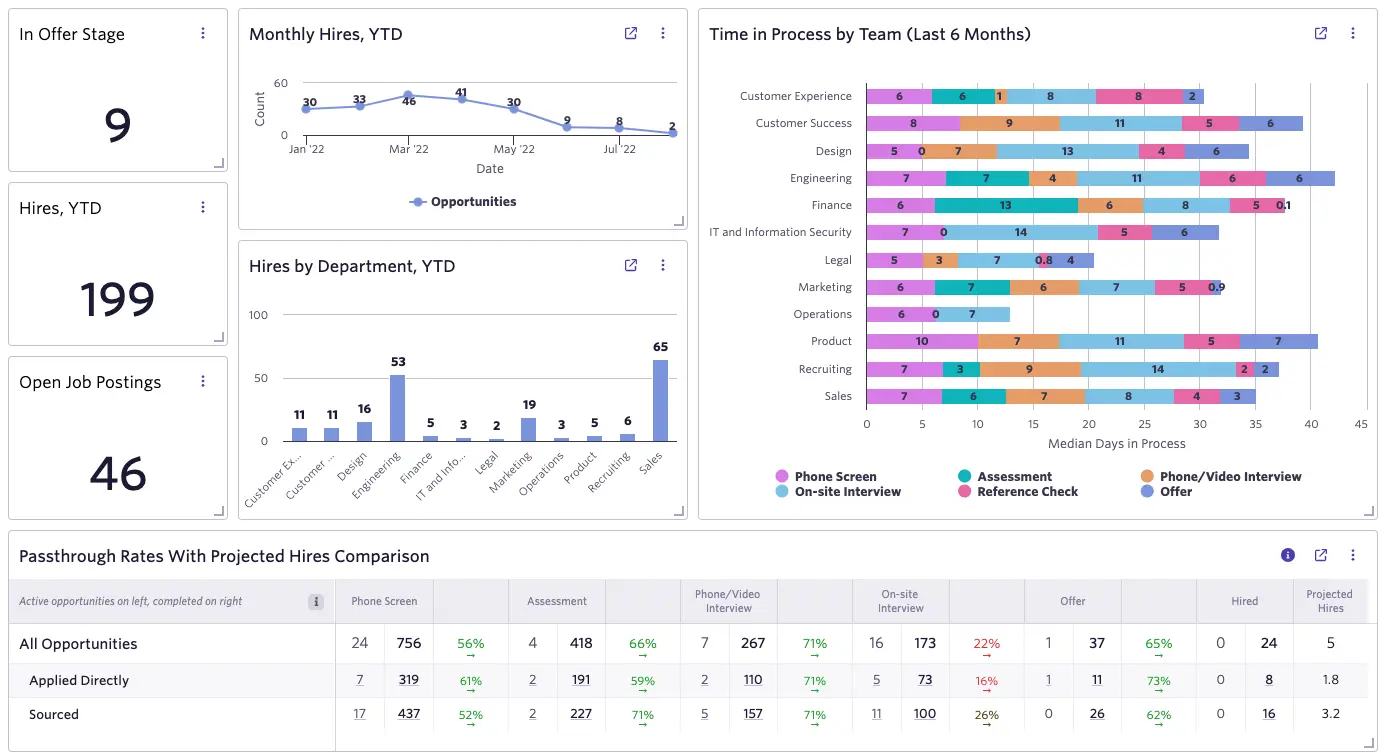
Another major differentiator is Ashby’s analytics. It goes beyond basic reporting and allows teams to drill into funnel performance, hiring velocity, and bottlenecks without relying on external tools or spreadsheets.
Key features:
- All-in-one recruiting platform: Combines ATS, sourcing, CRM, scheduling, and analytics into a single system. This reduces tool fragmentation and gives teams full visibility across the hiring funnel.
- Customizable ATS with structured workflows: Offers visual pipelines, customizable interview plans, and automated workflows, making it easy to standardize hiring while still adapting to different roles and teams.
- Advanced recruiting analytics: Provides custom dashboards, report builders, and real-time insights into metrics like time-to-hire, pass-through rates, and funnel performance—without needing external recruiting tools.
- Built-in sourcing and CRM: Enables teams to source candidates, run multi-channel outreach campaigns, and nurture talent pipelines directly within the platform.
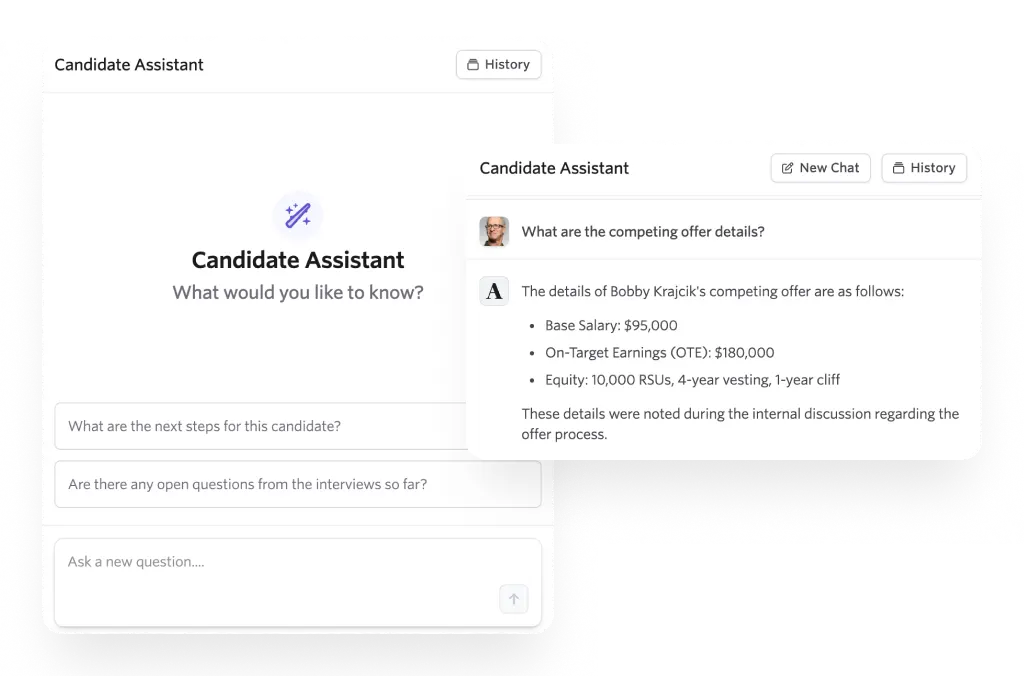
- AI-powered recruiting workflows: Includes AI-assisted candidate search, outreach personalization, and a candidate assistant that helps recruiters quickly access context and draft communication.
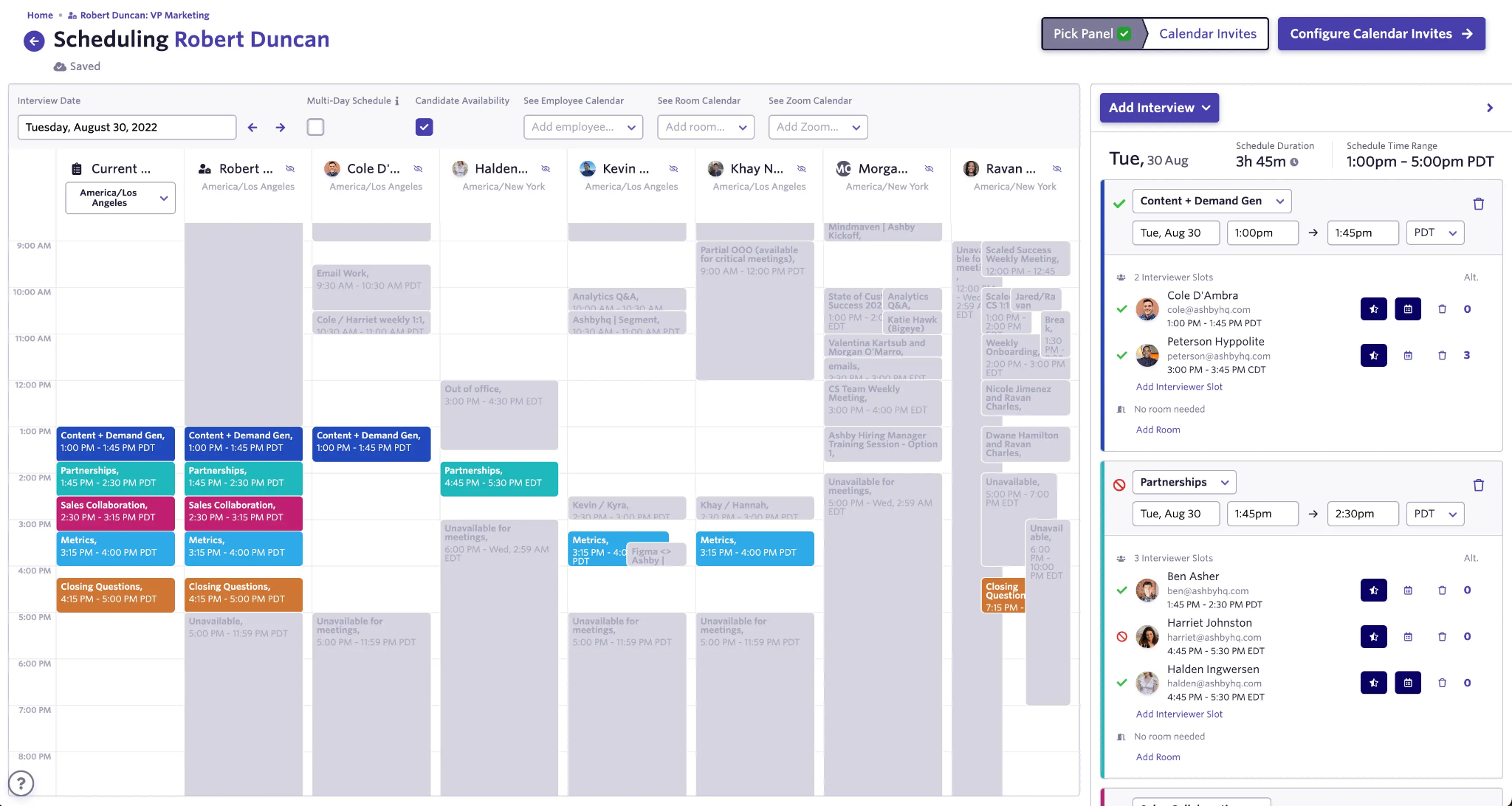
- Automated scheduling: Supports self-serve booking links, automated scheduling based on interview stages, and complex multi-interviewer coordination to reduce back-and-forth.
- Candidate communication automation: Automate job offer letters, assessments, and even candidate experience surveys.
- Strong integrations and data sync: Offers seamless integrations with tools like Gmail, Google Calendar, Slack, and HR systems, ensuring all hiring data stays connected.
Pros:
- Ashby replaces multiple tools with a single, tightly integrated platform, reducing context switching
- Its analytics capabilities are significantly more advanced than most ATS platforms
- Highly customizable workflows make it adaptable for both startups and enterprise teams
AI features are embedded into actual workflows (not just surface-level add-ons)
When not to choose this tool:
- If you have a smaller hiring team that doesn’t require such a comprehensive system
- Initial setup and migration may take time due to the platform’s depth
Pricing: $300/month for 1-10 employees. Scales depending on your team size.
How Ashby compares to Gem: Compared to Gem, Ashby offers a much more complete, end-to-end recruiting system. While Gem is strong in sourcing and outreach, Ashby goes further by combining sourcing, ATS, scheduling, and analytics into one platform. Ashby’s reporting and analytics are also a lot more in-depth as compared to Gem.
It’s a better fit for teams looking to consolidate their stack and gain deeper visibility into their hiring performance—especially as they scale. But Gem’s pricing is a lot lower than Ashby, if that’s a concern for your team.
5. BambooHR: Best for candidate onboarding and employee management
Best use case: Companies that want hiring integrated with HR, payroll, and employee management in one system.
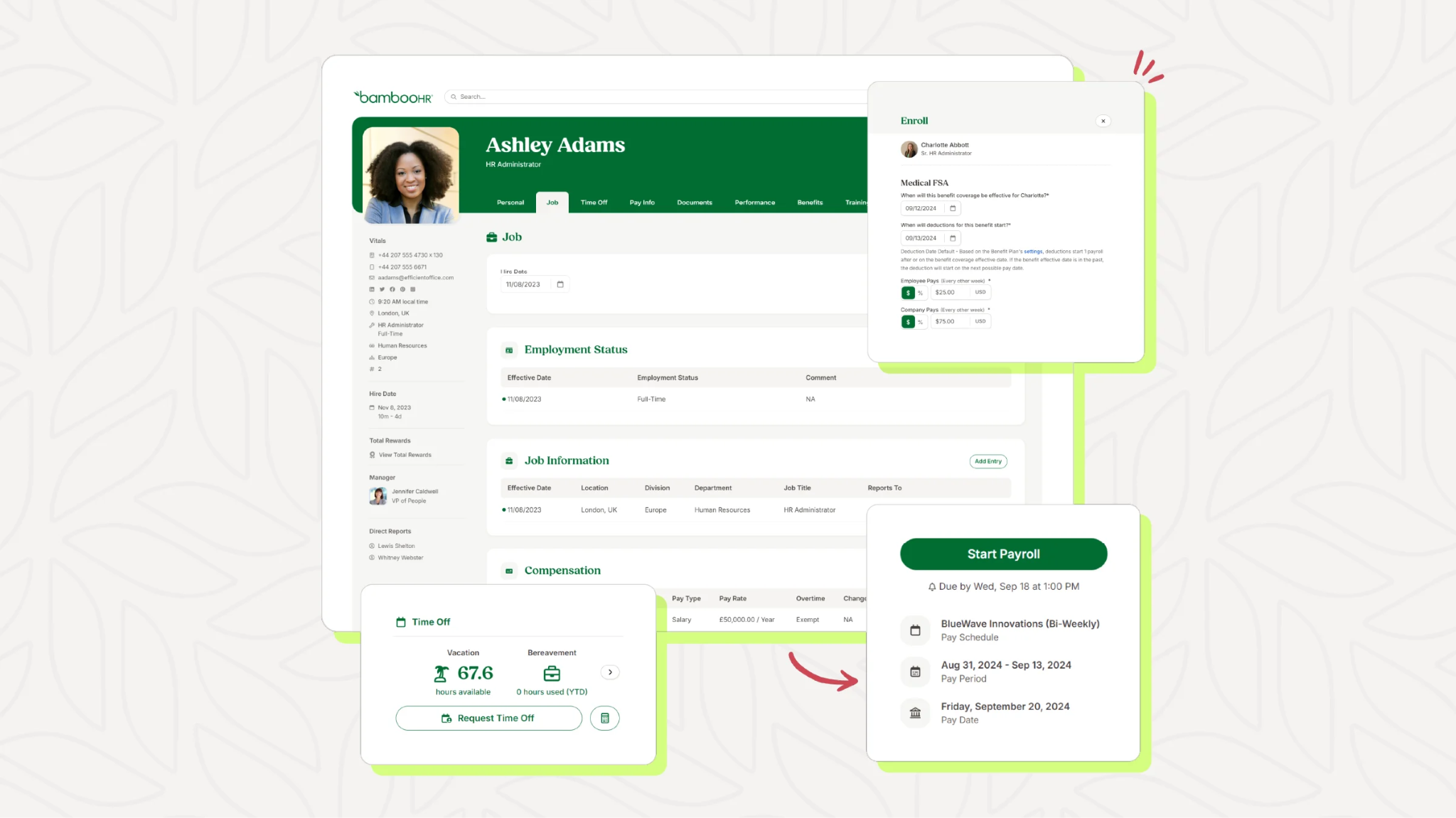
BambooHR is an HR platform with built-in applicant tracking, designed to manage the full employee lifecycle. Instead of focusing deeply on recruiting workflows, it connects hiring with onboarding, employee data, performance management, and compliance.
Its ATS is tightly integrated into the HR system, allowing candidate data to flow directly into employee records once hired. This makes it easier for HR teams to manage transitions without switching tools, but it also means recruiting features are more basic compared to dedicated ATS platforms.
Key features:
- Structured onboarding workflows with checklists, e-signatures, and new hire packets
- Centralized employee database with custom reports and approval workflows
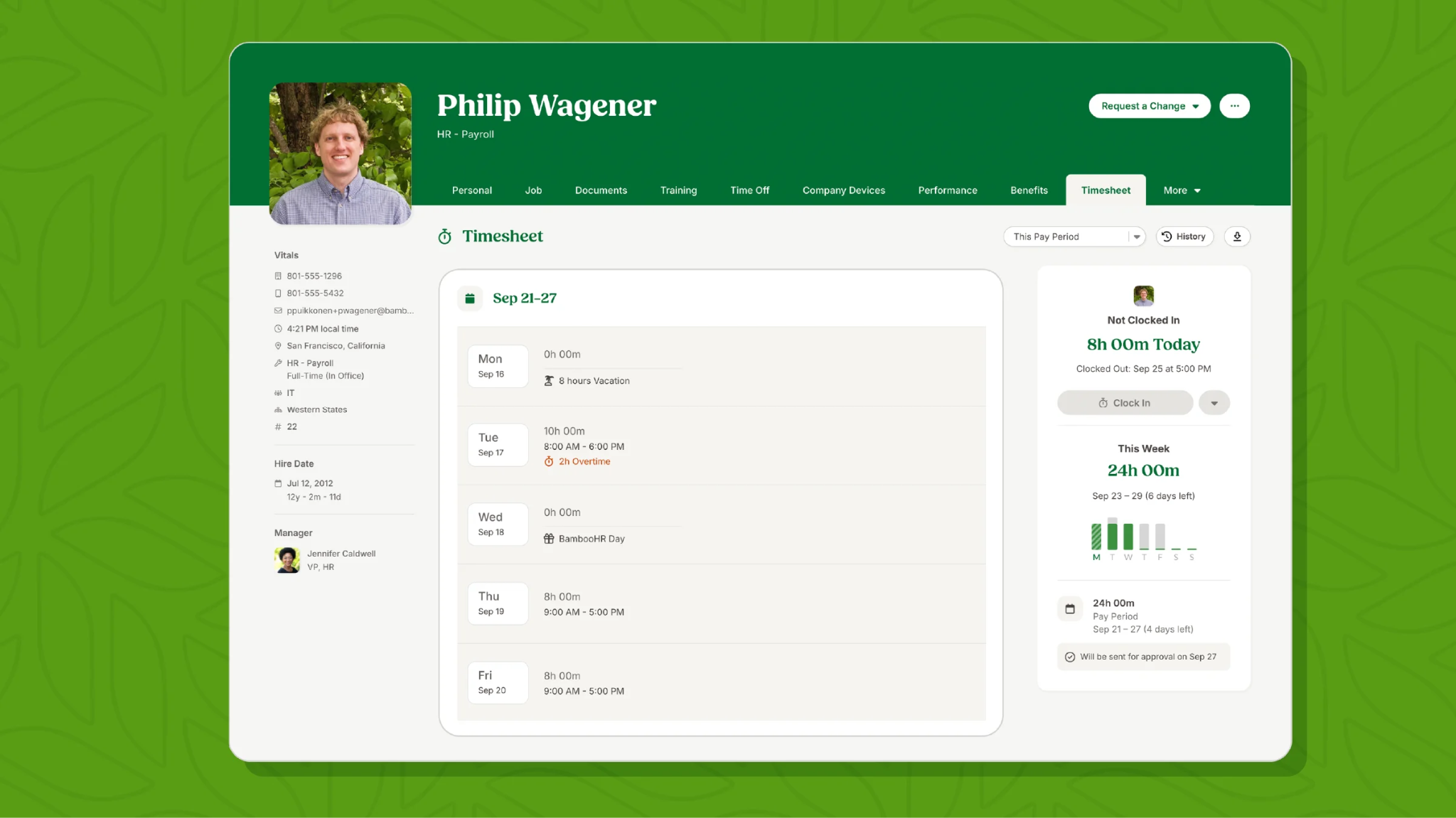
- Performance management with 360° feedback, goal tracking, and review cycles
- Compensation management including benchmarking, planning, and pay visualization (higher tiers)
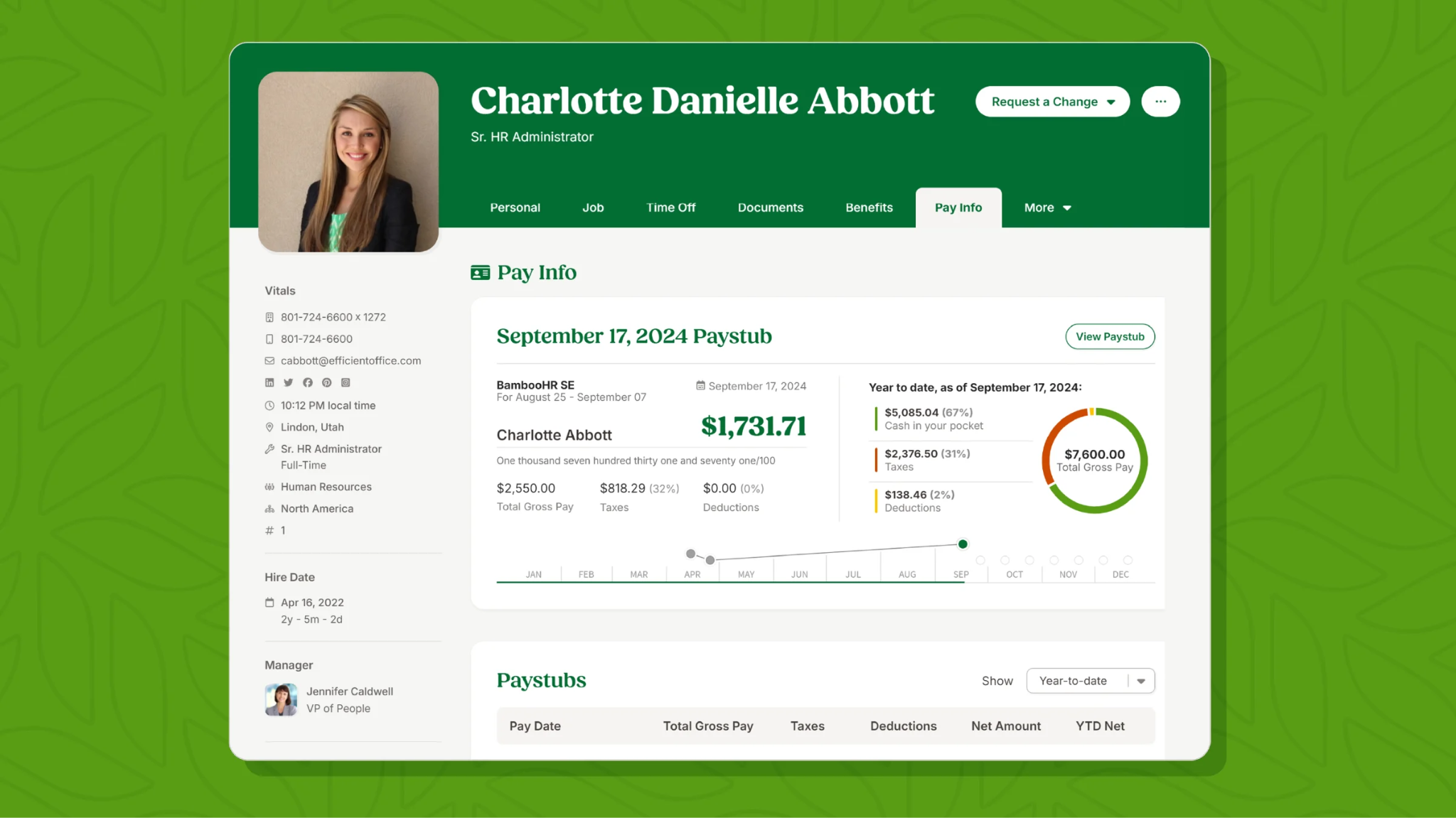
- Employee engagement tools like announcements, communities, and satisfaction tracking
- AI-powered HR insights and reporting dashboards
Pros
- Strong HR capabilities beyond hiring (onboarding, performance, compensation)
- Seamless transition from candidate to employee records
- Easy to use for HR teams without technical complexity
- All employee data centralized in one system
When not to choose this tool:
- ATS functionality is relatively basic
- Limited sourcing and outreach capabilities
- Not ideal for high-volume or complex hiring workflows
- May require additional tools for advanced recruiting
Pricing:
- Core: $10 per employee/month
- Pro: $17 per employee/month
- Elite: $25 per employee/month
- Additional costs for payroll, benefits, and other add-ons
- Small companies may have a minimum monthly cost (~$250)
How BambooHR compares to Gem: Compared to Gem, BambooHR is more focused on HR operations than recruiting. While it offers a more integrated experience across hiring, onboarding, and employee management, it falls short on advanced AI-powered sourcing, automation, and pipeline management that Gem is designed for.
How to choose the best Gem alternative for your hiring team
Choosing the right Gem alternative comes down to identifying where your current workflow is breaking—not just which tool has more features. Here’s a quick deciding framework to evaluate the best ATS implementation for your needs:
- If you’re still using multiple tools alongside Gem: You likely don’t have a true system of record. Many teams still rely on a separate ATS, scheduling tool, and reporting layer. This creates data gaps and manual work.
- Look for: A platform that consolidates ATS + CRM + scheduling + analytics. Your best fit here would be a platform like Kula or Ashby.
- If reporting feels incomplete or requires manual work. Your analytics layer isn’t strong enough. If you’re exporting data to spreadsheets or struggling to track funnel metrics, your tool isn’t giving you real visibility.
- Look for: Custom dashboards, drill-down reporting, and real-time pipeline insights offered by Ashby or Kula.
- If your workflows feel rigid or hard to customize: The system isn’t adapting to your hiring process. This usually shows up when teams have to adjust their process to fit the tool instead of the other way around.
- Look for: Flexible pipelines, configurable workflows, and role-based customization offered by Ashby.
- If your team struggles with adoption: The tool is too complex or unintuitive. Common signs include too many clicks, steep learning curve, inconsistent usage across hiring managers.
- Look for: Clean UI, fast workflows, and minimal onboarding time by tools like Kula and Workable.
- If your hiring is highly structured and compliance-driven: You need process control
Especially relevant for enterprise teams with multiple stakeholders.- Look for: Structured interviews, scorecards, and standardized evaluation frameworks offered by Greenhouse.
- If your hiring overlaps heavily with HR operations: You need tighter HR integration
For teams managing onboarding, payroll, and employee data in the same system.- Look for: ATS + HRIS capabilities offered by BambooHR
- If your focus is outbound recruiting and pipeline building: CRM depth matters more than ATS depth. This is common in sourcing-heavy teams.
- Look for: Strong outreach automation, engagement tracking, and candidate rediscovery. In this case, Gem still might be the best fit for you.
The key is to map your bottleneck to the capability you actually need. Most teams don’t switch tools because of one missing feature—they switch because the system stops scaling with how they hire.
Why you should stay with Gem
Gem still makes sense for certain teams—especially if your hiring model is heavily focused on sourcing and outbound recruiting.
If your team relies on building pipelines, running outreach campaigns, and nurturing passive candidates, Gem does this really well. Its CRM capabilities are strong, and features like email sequences, engagement tracking, and candidate rediscovery are designed specifically for sourcing-heavy workflows.
Gem also works well if:
- You already have a solid ATS in place and only need a sourcing + CRM layer on top.
- Your recruiters spend most of their time on outbound rather than managing full hiring pipelines.
- You don’t need deep customization or advanced reporting across the entire hiring funnel.
- Your team is already trained on the tool and switching costs outweigh the benefits.
That said, many teams reach a point where sourcing is no longer the bottleneck—execution is. Screening, scheduling, coordination, reporting, and decision-making start taking more time than sourcing itself.
Instead of adding more tools to your stack, Kula brings sourcing, ATS, scheduling, and analytics into one system—with AI built directly into each step.
If you’re starting to feel those gaps, it might be worth exploring what a more unified workflow looks like.
👉 Book a demo with Kula to see how it compares.

Gem and Ashby are both all-in-one ATS tools with modern AI and automation capabilities to support the hiring needs of companies of all sizes. Ashby offers more advanced interview intelligence and has highly responsive customer support, but Gem is comparatively more user-friendly with built-in sourcing capabilities.
Gem and Greenhouse both offer AI and automation for all stages of hiring. In comparison, Greenhouse is better suited for scaling hiring needs and provides more effective interview intelligence. Gem is more user-friendly, with easy-to-access reports.
Gem is a more dominant ATS tool, while Workable is an all-in-one HR platform. Workable and Gem both offer user-friendly interfaces and provide automated workflows. In comparison, Workable offers payroll integrations and is more affordable for those looking for a complete ATS + HRIS solution
While Ashby and Greenhouse are more technical and offer a high degree of customization, their reporting features are complex and unintuitive according to multiple users. Kula, on the other hand, provides advanced analytics with custom reporting, along with conversational analytics that allow easy access to recruiting insights through chat.